
WOODS WE USE
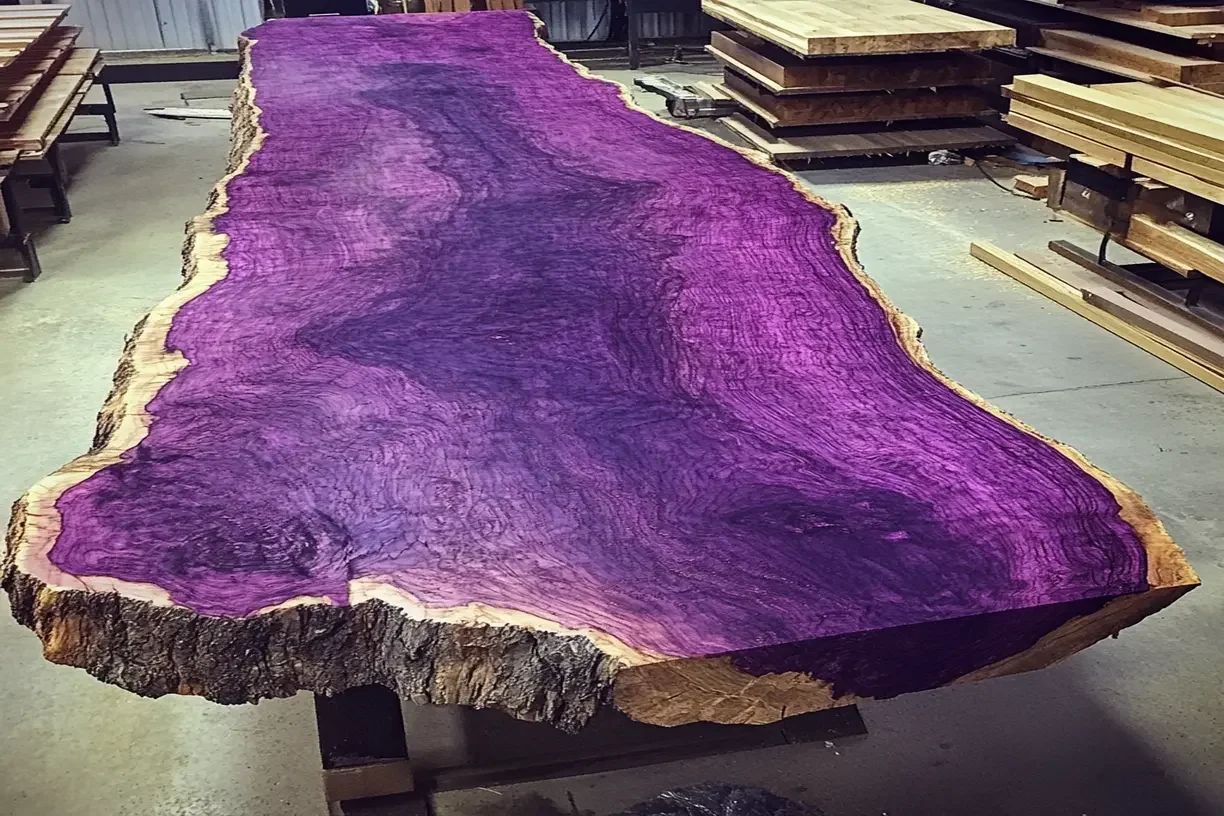
PURPLE HEART
Native to Central and South America, this is a very strong, heavy wood without annual rings, rays, or grain. The color is usually a uniform purple, but some pieces have vivid white streaks. In the shop, there are four primary problems with purpleheart: splintering, its effect on tools, color changes, and toxicity. Purpleheart is a very hard, somewhat brittle wood. Going too fast when ripping or crosscutting will cause it to splinter. Routing the wood can also cause splintering. This usually occurs at the beginning or end of the cut. One way to prevent this is to butt two pieces of wood against the edges of the board you are routing, to provide a continuation of the cut. Purpleheart will change color for several reasons, including excessive heat. When pressure accrues on a spot while sanding or routing too slowly, it darkens, as though a deep purple ink had been spilled on it. After purpleheart is finished, it may turn a dark reddish brown from the ultraviolet rays in sunlight. A sealing finish like spar varnish or tung oil is a good choice, and purpleheart refinishes beautifully.
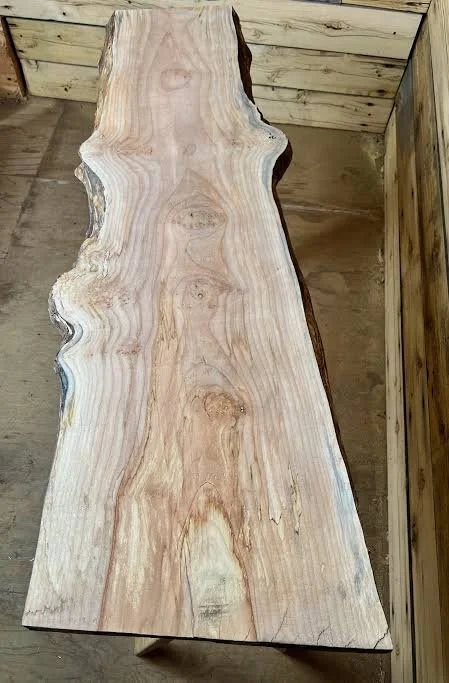
MAPLE
Also known as sweet, rock, and black maple, this durable and abundant species was a popular choice among woodworkers during colonial days. True to form, many of their projects can now be found in antique shops, little worse for the wear and featuring the rich patina of age. Working with hard maple requires very sharp, well-tuned tools. Nothing beats a planed maple surface, and stain will take to it easily. When sanding maple, it is recommended to stop at 150 grit. Any finer sanding will polish the wood to a point where it won't accept stain very well, especially oil stains. Water-based aniline dye stains are the most effective colorants for maple. Hard maple parts may crack to relieve the stress of a tight joint. Due to the wood's hardness, it is all too easy to break a brass screw driven into a pilot hole. To reduce this, find a steel screw that matches the brass screw in size and thread count and drive it into the hole first (after dragging it over a block of beeswax). After withdrawing the steel screw, safely drive the brass screw into the threaded hole.
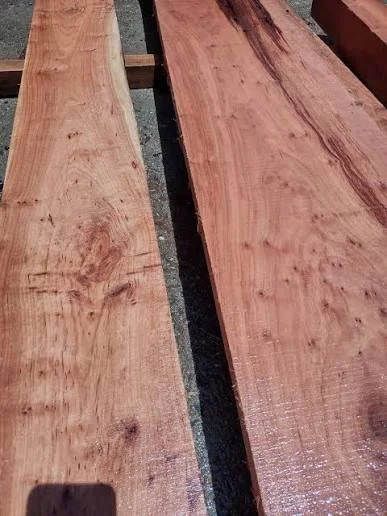
CHERRY
A member of the rose family, cherry is an attractive wood with distinctive characteristics and excellent working properties. A relative of the small orchard variety, the tree that produces most commercially available cherry wood is a native American species reaching a mature height of 60' to 90'. The tan color of freshly cut cherry sometimes has a hint of pink. However, cherry quickly develops a warm reddish- brown patina. All wood develops a patina with age, but Christian Becksvoort, the author of In Harmony with Wood, claims that cherry develops it faster than any other native species. This attractive patina makes cherry an excellent choice for clear finishing. Cherry is popular in the workshop, too, because of its outstanding workability. The moderate hardness and weight of cherry is similar to black walnut. In fact, hand tool enthusiasts often adopt cherry as a favorite because of its easy working qualities. Once a cherry project is completed, expect it to last for generations. This is one of the most stable woods to be found, and it rarely warps or twists. Uses: Cherry enjoys the distinction of being perhaps the most popular choice among cabinetmakers and furniture builders. Its moderate hardness makes cherry a suitable choice for furniture and cabinets, while being considered one of the easiest woods to machine.
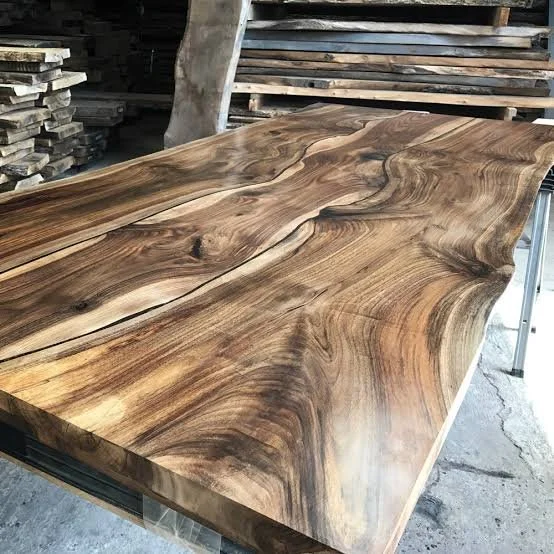
WALNUT
Some old, abandoned barns provide interesting surprises in the form of black walnut that has been hiding under years of weather-beaten exposure. Although hard to comprehend today, black walnut was commonly used for barn construction generations ago because of its exceptional decay resistance and abundant supply. Today the law of supply and demand has made black walnut one of the most expensive of all domestic species. The chocolaty brown color of this species brings a warm, comfortable look to any room, while its strength and durability ensure that assemblies are likely to last for generations. The hardness of black walnut falls between cherry (softer) and oak (harder). In the workshop, black walnut works quite easily with both power and hand tools, and its outstanding stability prevents woodworkers from getting bent out of shape with frustration. It planes, carves, and turns beautifully, with very infrequent tearing and ripping. While it has excellent gluing properties, allergies are common. The rich color is perfect for clear finishing, and it polishes beautifully.
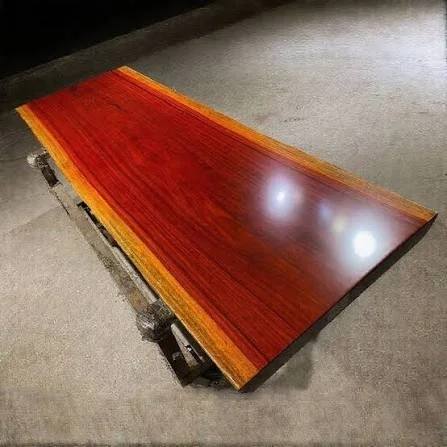
RED PADAUK
Also known as sweet, rock, and black maple, this durable and abundant species was a popular choice among woodworkers during colonial days. True to form, many of their projects can now be found in antique shops, little worse for the wear and featuring the rich patina of age. Working with hard maple requires very sharp, well-tuned tools. Nothing beats a planed maple surface, and stain will take to it easily. When sanding maple, it is recommended to stop at 150 grit. Any finer sanding will polish the wood to a point where it won't accept stain very well, especially oil stains. Water-based aniline dye stains are the most effective colorants for maple. Hard maple parts may crack to relieve the stress of a tight joint. Due to the wood's hardness, it is all too easy to break a brass screw driven into a pilot hole. To reduce this, find a steel screw that matches the brass screw in size and thread count and drive it into the hole first (after dragging it over a block of beeswax). After withdrawing the steel screw, safely drive the brass screw into the threaded hole.
WHITE OAK
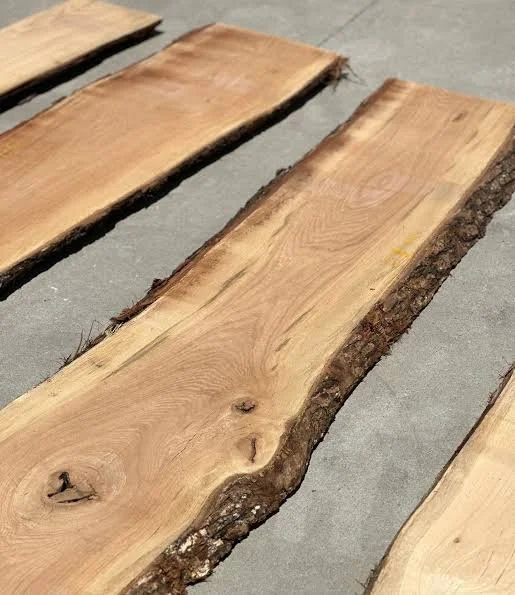
Whenever the old song "Roll Out the Barrel" is heard, white oak should come to mind. In days of old, most of those barrels were made from this sturdy species. That's because the pores of white oak are filled with tyloses, a substance that gives the wood watertight and water-resistance properties. The name refers to numerous species with similar characteristics, all of which are woods worth singing about, especially when considering their natural beauty and good working properties. Oak once had a reputation for dulling tools quickly, but modern power tools and machinery make it an easy wood to work today. Generally speaking, white oak offers somewhat less dimensional stability than red oak, but it is a relatively minor problem for both. Quartersawn white oak offers more stability than plain sawn lumber, a factor that played a huge part in its selection by Gustav Stickley for his Arts and Crafts furniture. However, quartersawn white oak is limited in availability and generally more expensive.
HONDURAN MAHOGANY
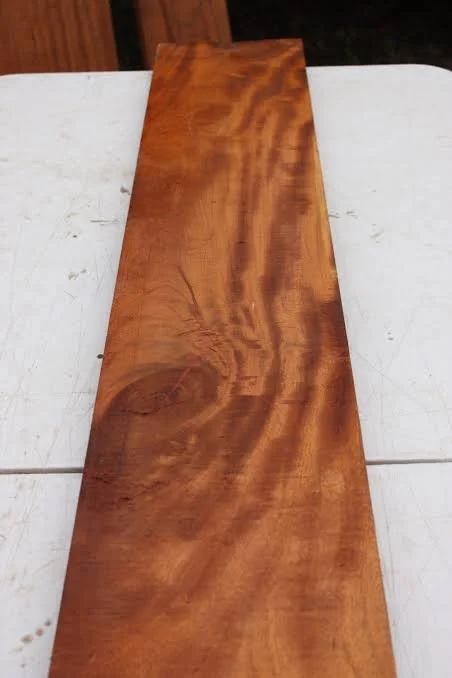
When New World explorers landed on the shores of Central America in search of bounty for their homelands, they discovered an unexpected treasure. By the early 1700s, shiploads of mahogany were being sent to the old countries, where it had caught the fancy of Europe's royalty and governing classes. Central American–grown mahogany, which consists of several species commonly referred to as Honduras mahogany, is still an excellent wood for today's woodworker to discover. The grain, which can grow in a straight, interlocked, or irregular pattern, offers some attractive surprises. Mahogany is a friendly wood to use in the shop. It cuts, planes, and turns with ease and resists shrinking and warping. Turners also claim that mahogany holds its shape better than many species. It is similar to cherry in weight and hardness, and its strength exceeds hard maple and oak.
OSAGE ORANGE
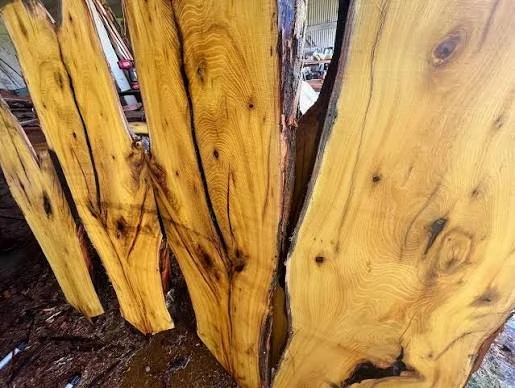
Woodworkers have long looked to the tropics for exotic woods that add unique colors and textures to their work. However, today's concerns about rain forest resources have sparked an interest in finding unusual temperate-climate woods. Osage orange, a novel species with a bright yellowish-orange heartwood, is one of the finest examples of an exotic domestic, one that may actually grow in your own backyard. Osage orange was native to a small area of drought-ridden, windswept prairie in Texas and Arkansas. Today its range extends throughout much of the southern United States. Osage Indians, the wood's namesake, often carried hunting bows and clubs made from this species, which was an excellent choice given its outstanding bending strength and shock resistance. It is more than twice as hard as hard maple, offers better stability than black walnut, and weighs more than hickory and teak. Extreme hardness and density make the wood challenging to machine and glue, but sharp blades and epoxy resin overcome potential problems.
Let's Build Something Together
Have a custom woodworking project in mind? Tell us about your vision, preferred wood species, dimensions, budget, and timeline. Whether you're looking for a handcrafted cutting board, custom furniture, or a one-of-a-kind piece, Weaver Woodworking is here to bring your ideas to life with quality craftsmanship and attention to detail.
Complete the form below, and we'll be in touch to discuss your project and provide a personalized recommendation and quote.